
20th October 2023
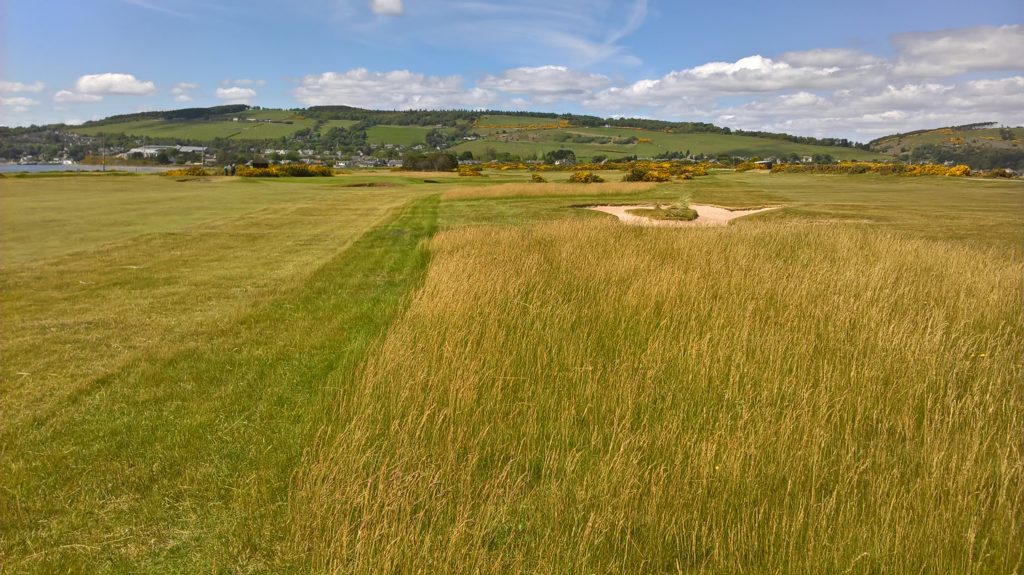
Autumn has arrived early this year with plenty of strong winds and rainfall along with cooler temperatures than in recent years. Rainfall figures from July to September were 66mm, 86mm and 82mm and reading 94mm so far for October. So plenty natural H2O which has helped restore some much needed moisture to the soils after the early summer dry weather. The course has greened up and grass cutting for the latter part of this summer was much more regular than since 2018 onwards. Our roughs again have not been cut mid summer which is good and helps maintain character and challenge.
During the summer we sand top dressed our weaker fairways which 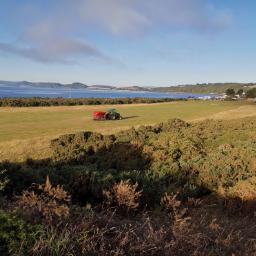 helps dilute fibre and in turn promote better soil characteristics for fine grass to tiller into. Some more selective sanding will go on.
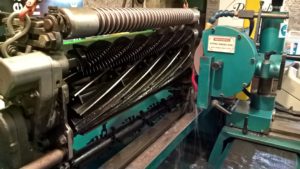
Recently we have again had the use of Castlestuarts’ seeding machine and drilled in seed to fairways 1,2,3,4,7,8 and 12 along with a few tee walk-offs. We have used a seed mix containing 20% Hard Fescue and 20% Sheeps Fescue along with other more common Fescues. The ‘Hard’ and ‘Sheeps’ component in the mix are cultivars that are better suited to droughty conditions which seem to cope well and survive even in very warm weather. We were a couple of weeks later in getting the machine this year although ground conditions were much better for getting the seed in the ground.
Our teeing grounds have also been scarified and seeded mid September and along with an Autumn feed are looking pretty healthy at the minute.
Work to the greens has included a nail tining down to 4” with our new Gxi8 spiker during mid September and recently a close 19mm shallow cone tine with a blend of fine Fescues broadcast into the holes. This was followed by hand dressing with Kings dune sand and then all brushed into the holes creating the perfect environment for the Fescues to germinate. Moisture and some mildish weather over the next month would help. This short term disruption is essential in the on going promotion of increasing the percentages of finer grasses in our greens. This week we’ve applied an Autumn feed to the greens with a 4.3.4 analysis with added Calcium and magnesium. This is geared to providing some nutrient to the new seedlings and also help keep turf vigor and any moss at bay. Next up we will be deep slitting and then verti-draining with 1/2″ tines to loosen up the soils and help drainage and root growth.
Moving into the winter months it is intended to verti-drain and slit tine the fairways and also spray with a Calcium/magnesium nitrate/iron mix to give them a little perk up and help deter moss.
We have also highlighted a couple of possible bunker additions at the 2nd and 8th holes. These are marked out in there locations with blue pegs in the ground. The reasoning for an additional bunker on the right of the 2nd is to frame the drive better since the whins were taken away a few years back. It would be roughly 25 yards short of the present bunker making it 245 yards from the Black tee and 220 yards from the White. The dogleg 8th hole has become obsolete for the longer hitters and is only 215 yards to carry from the White tee. The longer hitters are even carrying it from the Black tee! It is proposed to add another bunker a further 25 odd yards just past the corner of the dogleg on the left which would make it 240 and 265 from White and Black tees. The present large first bunker could be turned into a less penal grass bunker as it is mainly the shorter hitters that end up in here.
Our winter programme will again consist of repairing broken down bunker faces in which we hope to do around a dozen. Our long roughs will be cut and collected shortly. Selective whin trimming during poorer weather with also another couple of sections taken out along the 1st bank.
An additional water tank is to be installed close by our present tank to facilitate future water requirements should we decide to add irrigation pop ups into seven of our fairways.
Some recent roping off of high wear areas is essential in spreading the golfing traffic and help these bits recover for next season.
Enjoy your winter golf!
George Paterson
Head Greenkeeper
 We also dug out the last group of whins on the left of the 4th fairway which gathered a lot of golf balls. We have created another sandscrape which will again catch the stray shot and make for a tricky recovery, meanwhile speeding up play.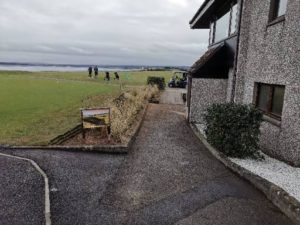

 greens in an effort to re wet these bits. We also gave all the greens a close pencil tine down to 5″ to help enable any water to penetrate more evenly. We have more wetting agent to go on at the next opportunity which will hopefully bring back a full recovery. My thoughts are that the Meadow grass (Poa) component in the sward doesn’t like the dry weather and will always be susceptible in weather extremes and when the greens are pushed for speed. The fertility in the greens is also low and particularly the sandier greens which suggests that a light organic feed is imminent and would benefit things overall for the rest of the playing season. We are currently cutting at 3.7mm which is low enough for our site and greens make up but ultimately, if players want faster greens then the greens swards will require more Fescue grasses.
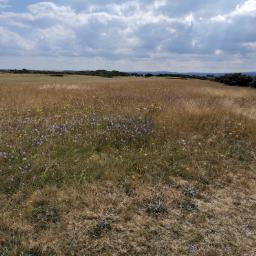 Our roughs have pretty much looked after themselves this summer with no summer cut required as they have thinned out with the dry weather. Plenty of colour in them with with dandelions and wild flowers here and there. A cut and collect will be done end of season.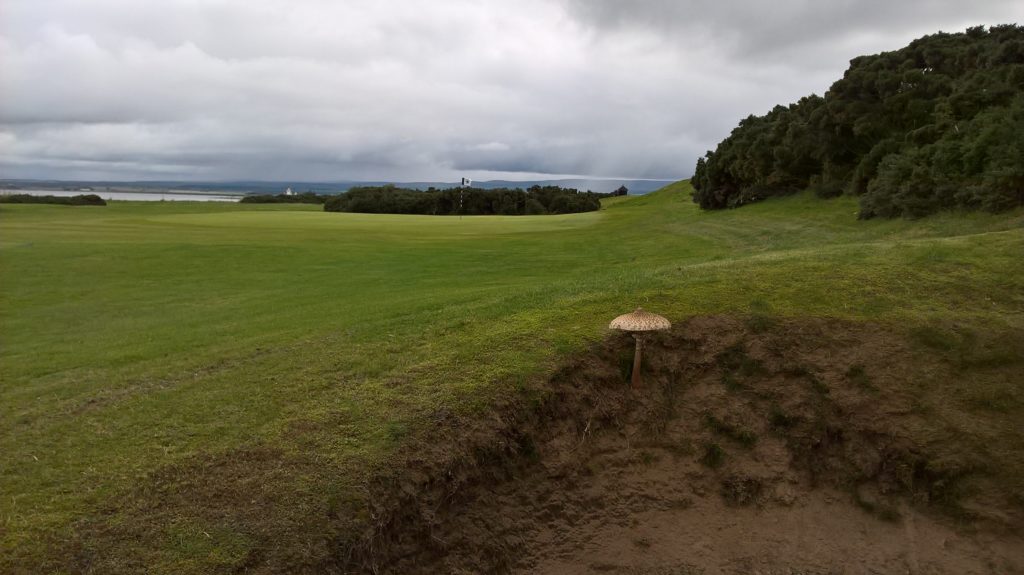
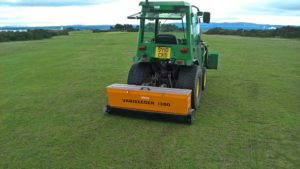 Hopefully we will get the fairways deep slit a couple of times this winter and do some much needed verti-drain work. An iron spray will also go on in the next few weeks to knock back any mossy areas.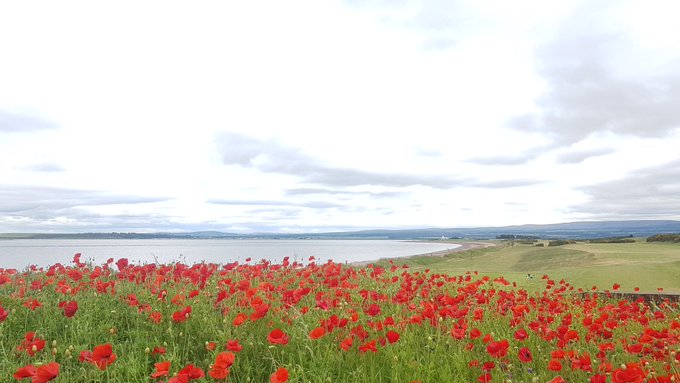
 With the recent dry weather cutting has eased off a bit on the fairways and are only being cut as necessary to avoid any unnecessary additional stress. We have been relentlessly patching and tidying the fairways each week this year with the high level of play and birds turning over divots in search of Leatherjackets. Warne, our new summer labourer has helped greatly along with our staff in keeping the place neat and tidy. We intend not to broadcast spray the fairways for weeds again this year and just to spot treat with the knapsack over the next few weeks. Mainly isolated plantains to deal with here and there. The greens surrounds were blanket sprayed back in early June treating mainly plantains, daisies and bits of clover.

 and firming the surfaces up. An Iron and Ammonia spray has gone on last week and a granular feed and wetting agent is planned next.
 The range got its first cut this week and is looking great. The downside is that it took almost 2 hours to rake up all the divots and collect golf balls before it could get cut. This is time we can ill afford with a small team of four greenstaff. It would help us greatly if the mats provided could be used or if hitting from the grass then a couple of minutes spent replacing your divots after would be greatly appreciated. Can I remind also that no iron play from behind the main mat and please do not leave divots sprayed over any of the small greens on the range. Thank you.
 Micro hollow tining is planned for around mid February. Fairways and greens surrounds have also been slit with some fairways receiving a sanding also. In November we sprayed Iron to all areas apart from the longer roughs in our combat against moss and this will be done again in the spring along with some Ammonia (Nitrogen) and wetting agent.
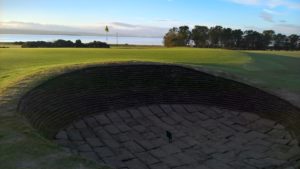 Up turned turf is used in the bases to both provide a firm base and also to keep stones from coming through. These will be topped up with sand around early March and brought into play for the first competitions. Proposal – The twin bunkers on the 15th fairway have been earmarked for a redesign into one large bunker. Back in the early 90s this was to be the case but while digging out the bunker we came across the irrigation pipe and had to split the bunker into two. The new irrigation line now runs past the right hand side of the bunkers therefore allowing these bunkers to be improved and made into something more aesthetically pleasing.
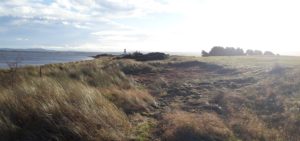 The large obtrusive section of gorse has been removed to open up the fairway view from the tee. The natural sand base has been exposed to create an in play sand scrape and this will both help speed up play and allow you to see where your ball goes.